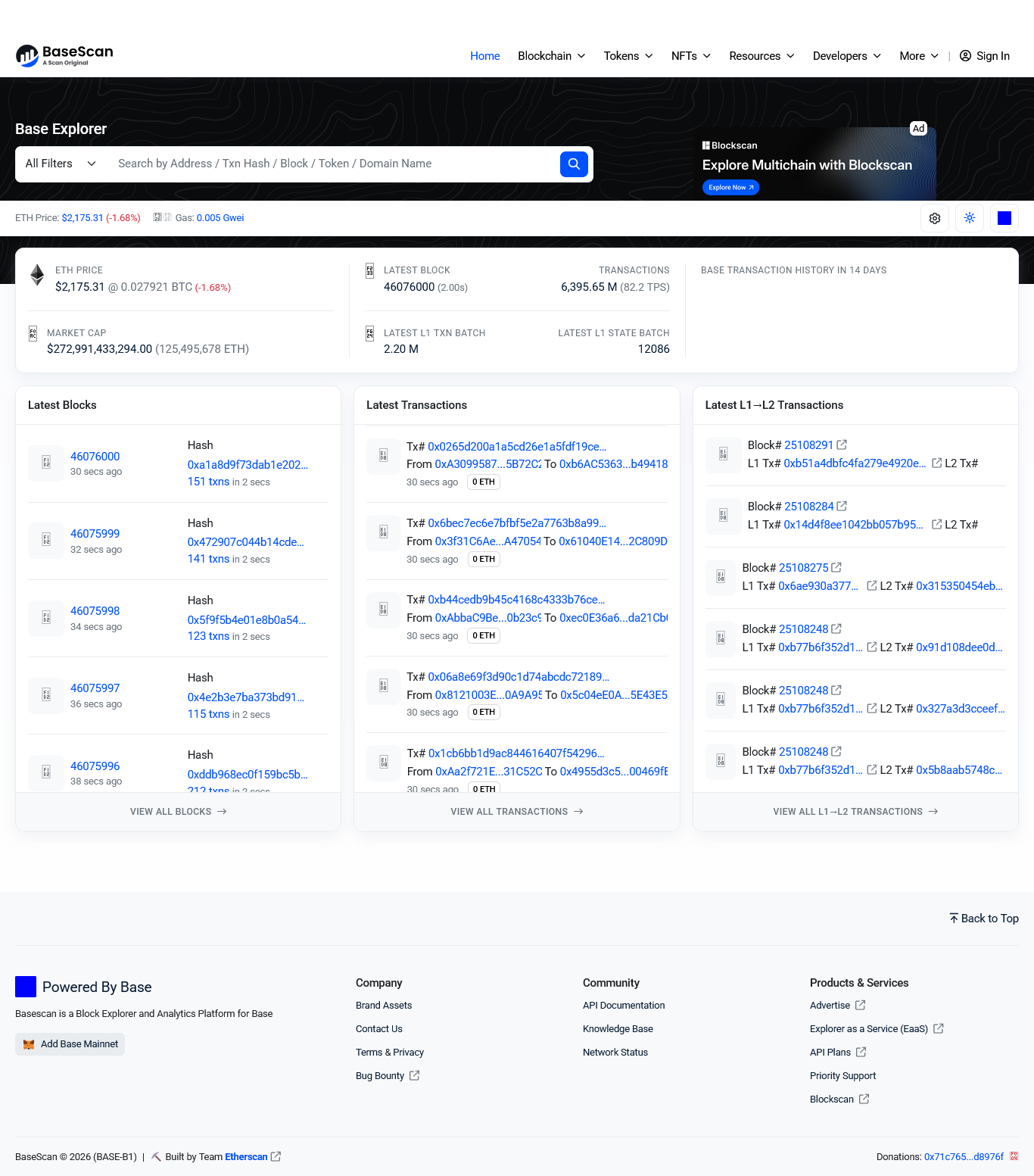
BaseScan: The Blockchain Explorer Powering the Base Ecosystem :-
As blockchain adoption accelerates, transparency has become one of the defining features of decentralized technology. Every transaction, wallet interaction, token transfer, and smart contract execution can be publicly verified on-chain. However, raw blockchain data is difficult for humans to interpret without specialized tools. That is where blockchain explorers come in.
What Is BaseScan :
BaseScan is a blockchain explorer and analytics platform designed specifically for the Base network, an Ethereum Layer 2 scaling solution built using the Optimism OP Stack. It indexes blockchain data and presents it through a searchable interface that allows users to inspect:
. Wallet addresses , Transactions , Smart contracts , Tokens and NFTs , Gas fees , Validator and block activity .Cross-chain transfersEvent logs and analytics
In simple terms, BaseScan functions like a search engine for the Base blockchain. Instead of searching websites, users search blockchain records.
Because Base is an open blockchain, every transaction is publicly recorded. BaseScan organizes this information into readable pages so users can verify activity independently without relying on centralized intermediaries.
The Rise of Base ;
The Base network was launched publicly in August 2023 by Coinbase as a low-cost, developer-friendly Ethereum Layer 2. Built using Optimism’s OP Stack, Base inherits Ethereum’s security while offering significantly lower transaction costs and faster processing times.
Since launch, Base has become one of the fastest-growing Layer 2 ecosystems in crypto, supporting:
. Decentralized finance (DeFi) applications , NFT marketplaces , Gaming projects , Social applications ,
. Stablecoin transfers , AI-integrated Web3 applications
As network activity expanded into millions of daily transactions, BaseScan became an essential infrastructure tool for users navigating the ecosystem.
Core Features of BaseScan
1. Transaction Tracking :-
Every blockchain transaction generates a unique transaction hash (TxID). By pasting that hash into BaseScan’s search bar, users can instantly view:
. Transaction status , Sender and recipient addresses , Gas fees paid , Block confirmations , Token transfers , Smart contract interactions , .Timestamp information
This level of transparency allows users to independently verify whether a transaction succeeded or failed.
For example, if someone sends USDC on Base, the recipient can verify the transfer directly on BaseScan without trusting screenshots or wallet notifications.
2. Wallet Address Analysis :-
BaseScan also enables users to inspect wallet addresses.
An address page typically displays:
. Current token balances , NFT holdings , Complete transaction history , DeFi interactions , Token approvals
. Analytics and activity heatmaps
This functionality is especially useful for traders, analysts, and researchers tracking on-chain behavior. Community users have even highlighted BaseScan’s transaction heatmap analytics as a way to visualize wallet activity over time.
3. Smart Contract Verification :-
One of BaseScan most important developer features is smart contract verification.
Developers can upload their contract source code to BaseScan, allowing the explorer to verify that the deployed bytecode matches the published code.
For DeFi users, contract verification is often the first step in determining whether a token or protocol appears legitimate. Community discussions regularly emphasize checking verification status and contract permissions to identify scams.
4. Token and NFT Tracking :-
BaseScan indexes ERC-20, ERC-721, and ERC-1155 assets on the Base network.
Users can explore:
. Token holders , Supply information , Transfer history , Whale concentration , NFT mint activity , Marketplace transfers
BaseScan’s token holder analytics can help identify warning signs such as concentrated ownership or suspicious wallet activity.
5. Developer APIs :-
BaseScan offers APIs that developers can integrate into decentralized applications, dashboards, and analytics platforms.
The APIs allow access to:
. Transaction data , Token balances , Smart contract events , Block information , Gas metrics , Historical account activity
Because BaseScan follows the same architecture as Etherscan, developers familiar with Ethereum tooling can adapt quickly.
Why BaseScan Matters ;
Transparency ;
Blockchain technology is built on transparency, but transparency is only useful if users can interpret the data.BaseScan transforms complex blockchain records into understandable information accessible to anyone.This openness reduces reliance on centralized institutions and enables independent verification of financial activity.
Troubleshooting Transactions :-
Wallet interfaces occasionally fail to display updated balances correctly, especially during periods of network congestion or indexing delays.
In these situations, BaseScan serves as the authoritative source of truth for blockchain activity. Users can verify whether funds actually moved on-chain regardless of wallet display errors.
Conclusion :-
BaseScan has emerged as one of the most important tools within the Base ecosystem. By providing transparent, searchable access to blockchain data, it empowers users to verify transactions, analyze smart contracts, monitor tokens, and navigate decentralized applications with confidence.
For developers, BaseScan offers powerful APIs and contract verification tools. For everyday users, it acts as a trusted window into blockchain activity. And for the broader crypto industry, it represents a core principle of decentralization: open and verifiable access to information.
As blockchain ecosystems continue growing in scale and complexity, tools like BaseScan will remain essential for maintaining transparency, trust, and usability across the decentralized web.